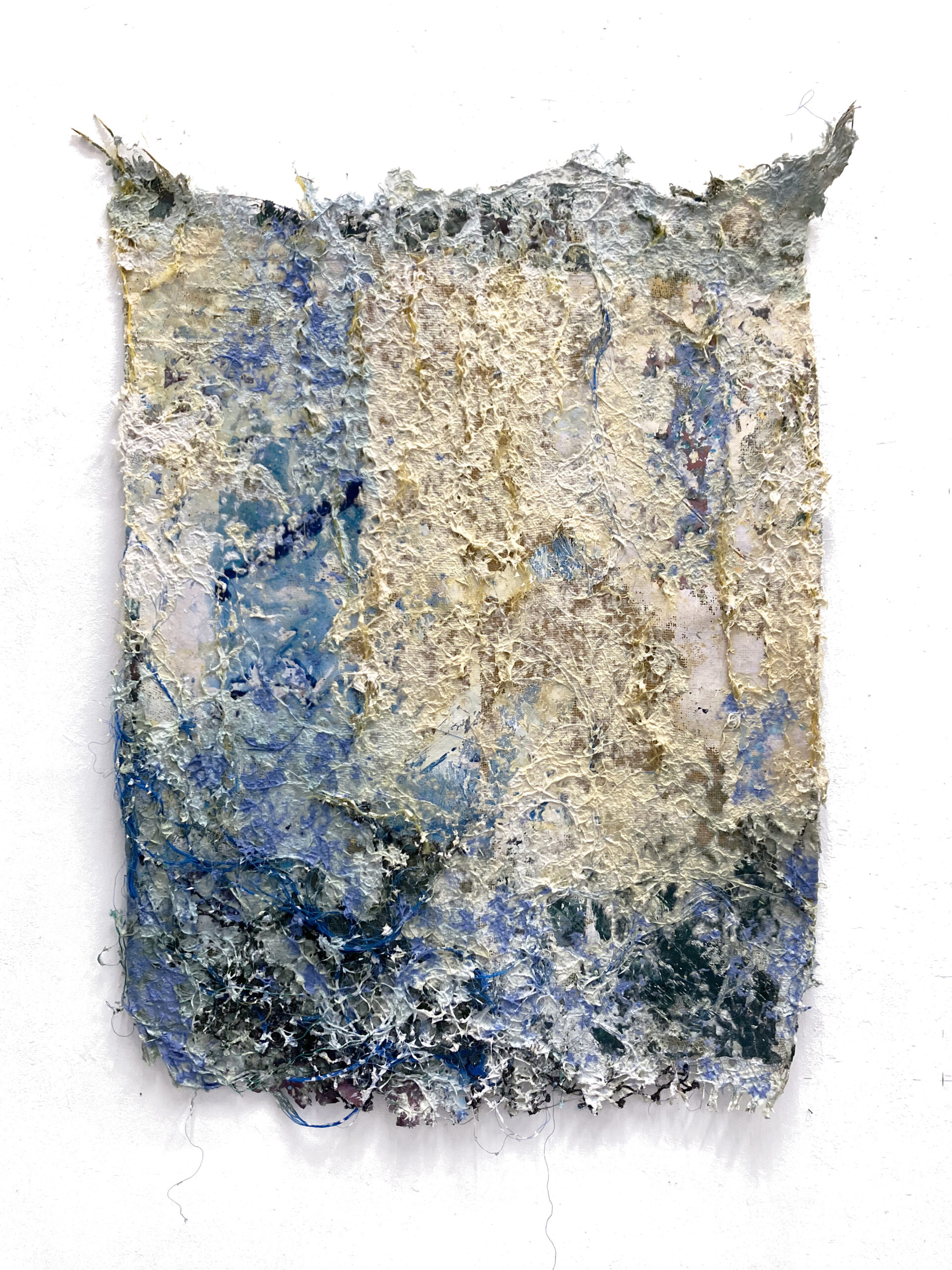
My large-scale paper paintings are explorations of terrain, a physical encounter with paint and foraged materials that mimics natural forces, and movement of plant, plastic and silt. My work emerges from material experimentation and a desire to confront my own use of acrylic paint—plastic that I struggle to abandon despite its environmental impact.
The Burren, a maritime karst landscape on Ireland’s western Atlantic edge, provides the ideal site for these investigations. This unique environment hosts Arctic, Mediterranean, and Alpine plants sheltering in limestone fissures called grykes—cracks where rock surrenders to chemical weathering. The coastline pulses with ongoing transformations that point to our present impact and uncertain future.
I have been using collected sea plastic to inspire my color palettes for years. My process begins with my own refuse, dried studio floor paint that is applied like a decal to burlap—the hardened plastic paint flipped and adhered to create a palimpsest base. I then apply plant-based dyes and paper pulp to the surface that creates a binder for the materials beneath.
The resulting works mirror the coastline’s ever-changing debris and our cultural habits. The permeable paper pulp surface opens like grykes to receive plastic waste, while plant dyes interweave with mesh functioning as both substrate and compositional element. The works embrace impermanence as pieces decompose over time—natural dyes fade, and with no binder other than water and pulp, could fall away as surfaces shift.
Rather than depicting environmental processes, the works enact them, revealing hidden transformations that connect human impact to our ever-changing reality. Through systematic foraging and material reuse, these tapestries establish a methodology for understanding our complex entanglements with the environments we inhabit.
What Passes Through tapestries range in scale from 4 – 5ft and are made of burlap, reused studio paint, paper pulp and natural dyes.
